Our storytelling advice column continues: A journalist asks a question and we find an accomplished narrative writer or editor to answer it. In our first installment, Dave Tarrant of the Dallas Morning News had a question about how to recognize stories with narrative potential. Jack Hart, author of Storycraft, gave him the answer. Today’s players:
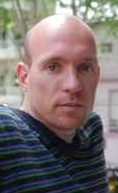
Robert Friele, journalist, Amsterdam. He studied journalism at the Groningen University in the Netherlands and afterward worked as a sports journalist for almost eight years. From 2008 to 2012, he was the Latin America correspondent for Dutch press agency GPD and a financial daily, Het Financieele Dagblad. He’s written narrative for a variety of media and now works as an editor at De Volkskrant, the second-largest daily in the Netherlands.
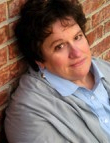
Amy Ellis Nutt, reporter, Newark Star-Ledger. She won the Pulitzer Prize for feature writing in 2011 for “The Wreck of the Lady Mary,” an investigative series about the deadly sinking of an East Coast scallop boat. She was a finalist in 2008 for “The Accidental Artist,” about a man’s creative transformation following a traumatic brain injury. The story became the basis for her book Shadows Bright as Glass. Last year, she sat on the feature writing jury for the Pulitzers. A longtime reporter at the Newark Star-Ledger, she’s also an adjunct professor in the Columbia University Graduate School of Journalism, and a former Nieman Fellow at Harvard.
Friele’s question:
How do you look at your own work objectively? Let me elaborate: When reading other people’s stories, I can always say where the strong points and weaknesses are, and suggest things that make the stories better. However, while writing myself, after a while it gets so difficult to look at my own story objectively – with “cold eyes,” as I once heard someone say. I have the feeling that if I could do that better, my stories would get a lot better.
Nutt’s answer:
I think it was Thomas Wolfe who once said about writing: Just put a sheet of paper in the typewriter and start bleeding.
The accoutrements of writing may have changed, but not the pain. For me, much of the pain isn’t in the writing, it’s in the rewriting, mainly because I don’t know when to stop. Having a great editor to rely on is a gift, but if you want to be better, and polish your own prose, the most important thing is to try and get distance from your writing in order to look at it with an objective eye. There is any number of ways to do this. When you finish writing, if you’re not on deadline, walk away from your desk, leave your writing behind and do something different – work out, sleep, take a walk, read. When you return, you will have fresher eyes.
Another important tool is simply to read your story out loud. You can hear, better than see, missing transitions, mistakes in wording and cadence, awkward phrases, where a narrative is unclear or flagging. The reason for this is the mind often self-corrects for mistakes picked up by the eye, which is why grammatical errors, typos and missing words can easily be missed. Another way to better pick up the small mistakes is actually to change the font or the color of the text to make it more unusual, which will help the brain “see” the mistakes more readily.
In general, though, when it comes to content, to trying to make your sentences sing, less is always more. It’s the hardest lesson for any writer – to slaughter your beauties – but also one of the most essential. I have a tendency to use too many adjectives, so I have to rein myself in by telling myself one is always better than two. And as for adverbs, none is usually better than one. Tighten sentences and sharpen details. If a word is vague, be more specific; if a phrase is overused, find another.
A few other reminders: Write in the active voice, not the passive. I’m amazed at how often this still happens in my own writing. Avoid: “to be,” “to have” and “to do.” And make sure your verbs push the story forward. As F. Scott Fitzgerald once wrote to his daughter, “All fine prose is based on the verbs carrying the sentence.” Another lesson, from Fitzgerald’s The Great Gatsby: Eliminate commas. Scribner’s copy editors added 1,048 of them, which were eventually removed.
Finally, you might want to pick up a copy of Susan Bell’s lovely book, The Artful Edit, which often uses The Great Gatsby and the well-documented relationship between Fitzgerald and his editor, Maxwell Perkins, as a guide. In the introduction, she writes:
We are loath to put an objective ear to our subjective selves. But to edit is to listen, above all; to hear past the emotional filters that distort the sound of our all too human words; and to then make choices rather than judgments. As we read our writing, how can we learn to hear ourselves better?
It’s a question, I think, that every writer continues to ask.