I’ve never met William Langewiesche, and I don’t know many of his secrets, but I know he and I have at least one thing in common: We’re guided by the same terrible fear.
“You have this precious, incredibly privileged thing,” he told the San Francisco Chronicle in 2007, “which is the reader’s attention for a little while. And you can make the slightest misstep and the reader will put you down. People will say that the reader lives in a busy world. But that’s not the reason why. The reason is that the writer blows it, and loses the reader’s trust.”
One of the best ways to lose a nonfiction reader is to write something confusing or opaque. Nobody wants to follow a mysterious stranger into a dark forest. Which is why it’s a good rule to do two things at the beginning of a long piece: Prove yourself as a good traveling companion, and point the way down a well-lighted path.
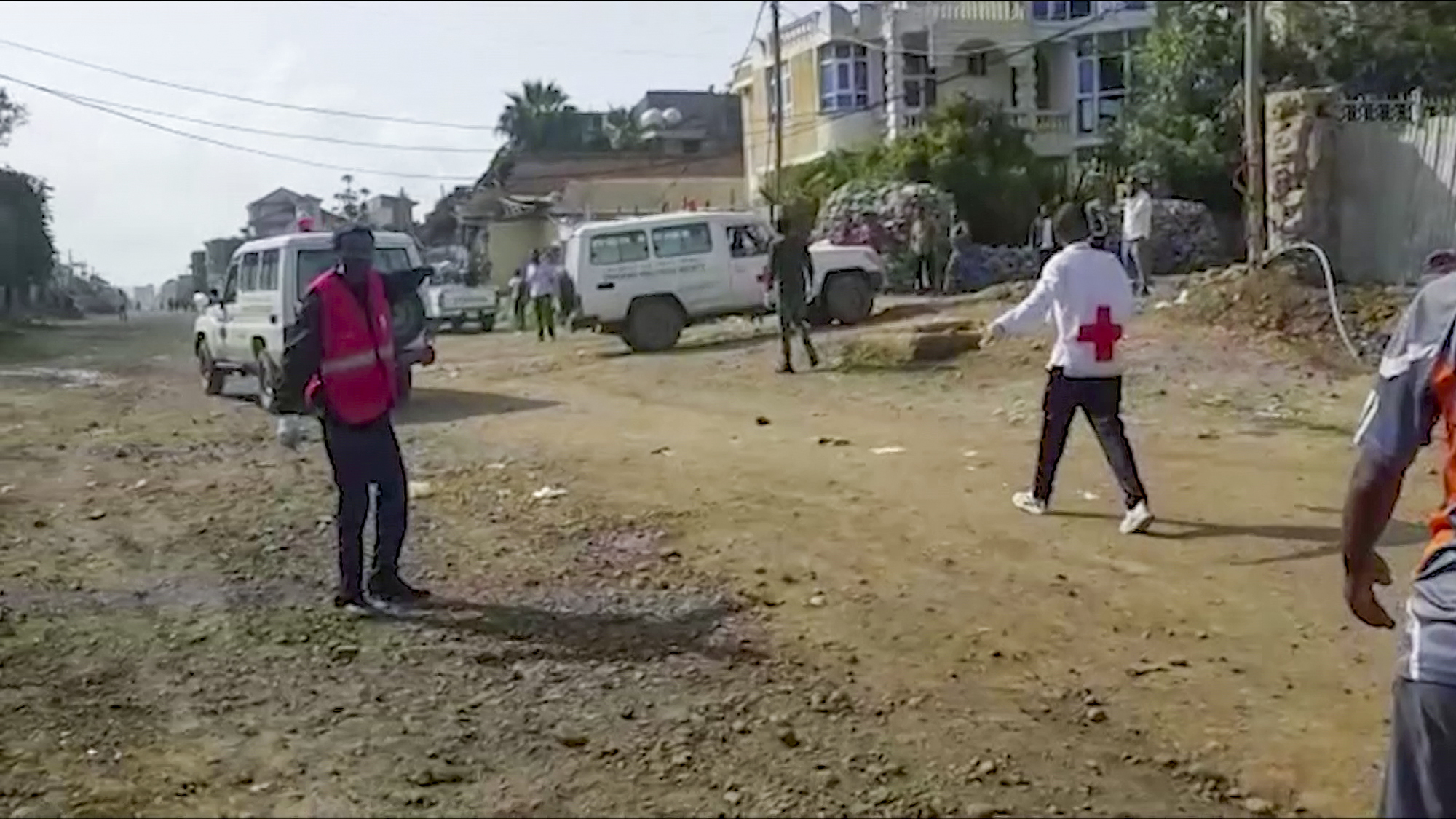
The Euphrates is a peaceful river. It meanders silently through the desert province of Anbar like a ribbon of life, flanked by the greenery that grows along its banks, sustaining palm groves and farms, and a string of well-watered cities and towns. Fallujah, Ramadi, Hit, Haditha. These are among the places made famous by battle—conservative, once quiet communities where American power has been checked, and where despite all the narrow measures of military success the Sunni insurgency continues to grow. On that short list, Haditha is the smallest and farthest upstream. It extends along the Euphrates’ western bank with a population of about 50,000, in a disarray of dusty streets and individual houses, many with walled gardens in which private jungles grow. It has a market, mosques, schools, and a hospital with a morgue. Snipers permitting, you can walk it top to bottom in less than an hour, allowing time enough to stone the dogs. Before the American invasion, it was known as an idyllic spot, where families came from as far away as Baghdad to while away their summers splashing in the river and sipping tea in the shade of trees. No longer, of course. Now, all through Anbar, and indeed the Middle East, Haditha is known as a city of death, or more simply as a name, a war cry against the United States.
That’s the first paragraph of “Rules of Engagement,” from Vanity Fair, a piece Langewiesche wrote in 2006.
It was a massive challenge. He wanted to explain an incident that at first glance seemed inexplicable – the U.S. Marines’ massacre of 24 Iraqis in Haditha the previous year. Any explanation would have been impossible, of course, without the deep knowledge he’d earned in his numerous travels through Iraq. But the reporting goes without saying. You can’t be a great nonfiction writer without being a great reporter. What led me through nearly 15,000 words of desert quagmire and military bureaucracy was Langewiesche’s voice.
Most newspaper veterans have heard an editor say, “That story practically tells itself,” or “Just get out of the way.” Well, I understand the sentiment. Some writers do wonderful work with a more straightforward delivery. But here’s why I never put down the story on the Haditha massacre: I felt as if Langewiesche wouldn’t let me. He wasn’t just saying, “This is what happened.” He was saying, “This is why it happened, and here is exactly how we’re losing a war being fought in our name.” He understood that in a story this twisted and complex, supplying the bare facts wouldn’t be enough. And he certainly couldn’t gloss over the rough details.
To begin with, the Marines didn’t do what they did for no reason. Their convoy was bombed in the road, causing two injuries and one death:
It is a requirement of understanding the events in Haditha—and the circumstances of this war—not to shy away from the physical realities here, or to soften the scene in the interest of politics or taste. Terrazas was torn in half. His bottom half remained under the steering wheel. His top half was blown into the road, where he landed spilling his entrails and organs. He probably did not suffer, at least.